
 By
·
4 minute read
By
·
4 minute read
BLUF: Japan-China relations continue to deteriorate as Tokyo reshapes its defense architecture in the Asia-Pacific, expanding regional relationships, defense exports, and training arrangements as a counter to growing Chinese capabilities and actions. In response, Beijing is carrying out its own defense activities, but the Chinese leadership is also leveraging key economic tools to shape Japanese behavior. The recent curtailment of tungsten powder to Japan, a critical input in the semiconductor supply chain, is unlikely to be the last shot in a growing rivalry.
Key Points:
- Japan is shifting its defense posture to adapt to changes in U.S. interests and expanding Chinese reach. While Tokyo remains constrained by its post-World War II constitution, it has drastically reinterpreted what it is “allowed” to do, and is taking full advantage to expand its own reach.
- China sees Japan as the most significant regional rival, and interprets Japanese actions regionally as another attempt to interfere in what Beijing perceives is China’s own natural sphere of influence. The issue is no longer one of events - it is structural.
- China is using multiple tools to influence Japan, and its control over critical minerals is a key leverage point, as seen in the recent constraints on Tungsten powder exports.
- We expect this economic coercion to continue, as Beijing brings other critical minerals, materials, and components into play. In some ways, this mimic’s Washington’s geoeconomic strategy to constrain China, but whereas the United States exerts influence through consumption and financial mechanisms, China largely draws on its position as a concentrated source of production.
Japan has been “remilitarizing” for decades. Whereas Tokyo was in the past confident in focusing on domestic economic dynamics and outsourcing its security to the United States, since the end of the Cold War it has steadily reshaped its national security posture. The February 8 election, which proved a resounding victory for the conservative Liberal Democratic Party (LDP), has added impetus to expanded defense capabilities and regional relations. While domestic issues (economics, jobs, housing) largely determine the direction of elections, the impact is often felt in foreign policy, and the window on defense has moved decisively.
Japan's FY2026 defense budget hit a record ¥9.04 trillion, tracking toward 2% of GDP with supplementary spending. The build-up is deliberately two-track. First, dual-use and unmanned: roughly doubled investment in unmanned systems, growing satellite programs, and development in unmanned cargo and combat vessels - systems that recognize Japan’s weak demographic position. Second, focusing on offensive reach and forward positioning - Japan is increasing attention to standoff munitions, aviation, and pushing missile batteries further forward along the island chain - highlighting a renewed attention to forward positioning and countering modern weapons systems. Japan’s most significant move came on April 21, when the cabinet scrapped the "five categories" that had confined arms exports to non-lethal items, permitting sales of warships, missiles, and fighter jets to the 17 states holding transfer agreements with Japan. Tokyo is actively knitting a lattice of partners around China.
The current tensions between China and Japan came to a head in November 2025, when Japanese Prime Minister Sanae Takaichi, in response to questions, said that a Taiwan contingency could be a "survival-threatening situation" for Japan - a trigger term in Japan’s national security law. Beijing has framed this as direct Japanese interference in Taiwan/China relations, and as a signal that Japan would go to war with China if there was a situation in Taiwan. In response, China issued several strong diplomatic statements, demanded a retraction, expanded maritime and air drills in and around Japanese waters, and unveiled a series of economic restrictions on Japan, focused on key supplies to critical Japanese companies.
In a case particularly relevant to the semiconductor industry - and everyone who uses them, China converted its dominance in tungsten supply chains into a precision tool of economic coercion. China controls over 80% of global tungsten mine production, and has introduced limitations on mine production and exports. Most significantly, Beijing has effectively halted tungsten powder exports to Japan beginning in February. Tungsten as a metal is a critical input for both defense and semiconductors. It is a key input in alloys for aircraft. For the semiconductor industry, tungsten powder - a very small portion of overall tungsten products - is the key input for Tungsten Hexafluoride (WF6), a key chokepoint in production, as it is the gas used to evenly deposit the contact layers in High Bandwidth Memory (HBM) and sub-12nm logic processors.
At least two Japanese producers of WF6 have announced as of July that they will curtail production, cutting off a flow of supplies to South Korean chip producers. While exact amounts of WF6 trade are largely kept at the corporate level, Japanese firms are the primary suppliers of the gas, particularly of the highest and most consistent quality supplies. The Chinese powder constraints have now hit gas production, with prices from remaining suppliers skyrocketing. As a secondary benefit, Beijing is encouraging more production at home, hoping its companies will ultimately be able to fill the gap. Other countries are also potential sources for increased production - assuming Beijing doesn’t constrain their tungsten powder supplies. But for any of these alternatives, there will be a time delay - first in ensuring that production is both of the highest quality and consistent, and second, in the necessary testing and assessment by companies as they seek new suppliers. The impact has a long tail, even if China begins easing export constraints.
Looking forward, we expect Beijing’s primary coercion avenues to remain economic, leaning on the levers where it holds structural advantages rather than risking armed confrontation. A series of targeted disruptions will continue to hamper Japanese supplies of minerals, gases, and specialty chemicals. China aims to raise the relative cost of Tokyo’s alignment choices while remaining below escalation thresholds. This strategy adds another layer of uncertainty into long-term supply contracts, and over time may compel greater diversification, but as noted above, that may take several years to materialize.
________________________________________________
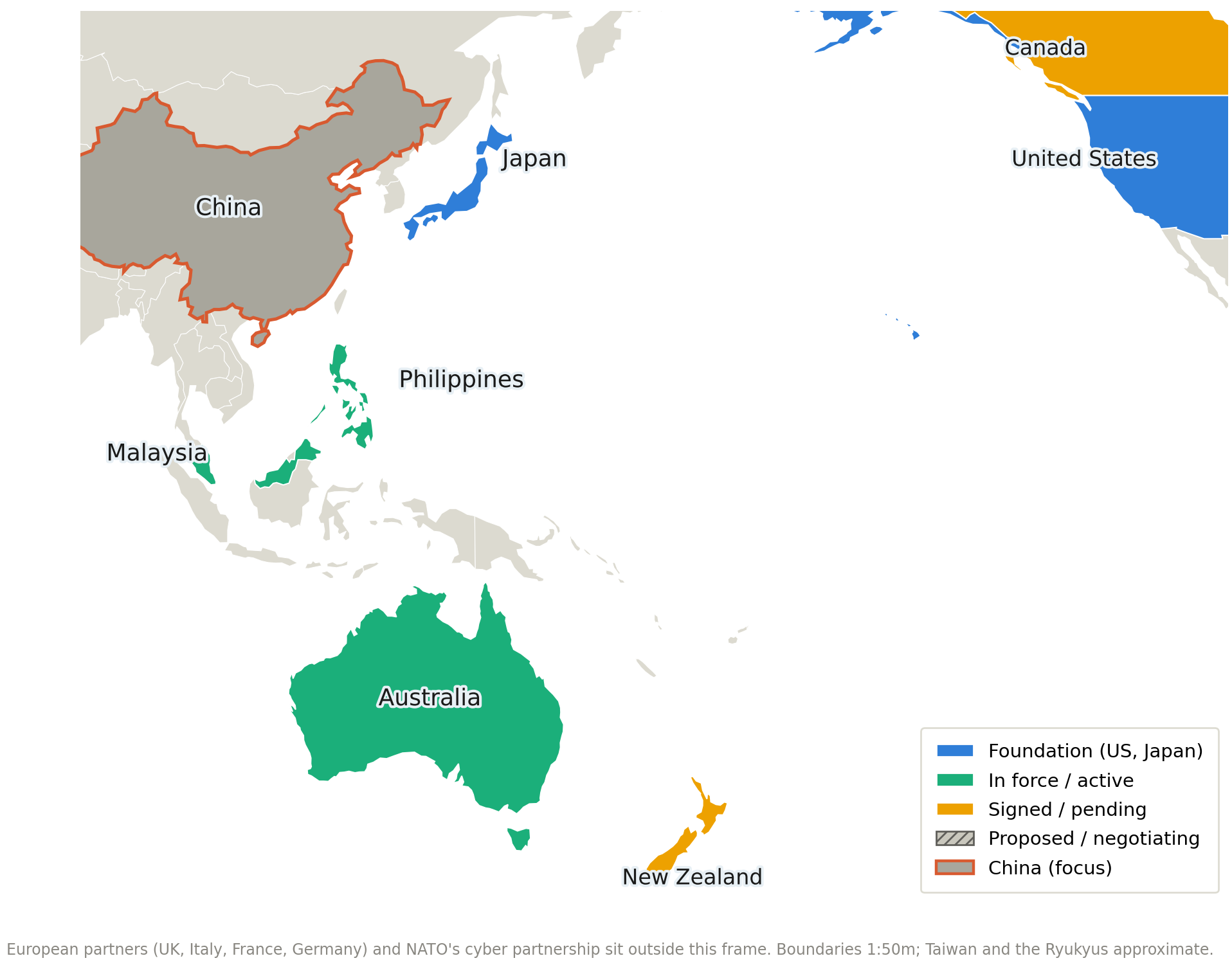
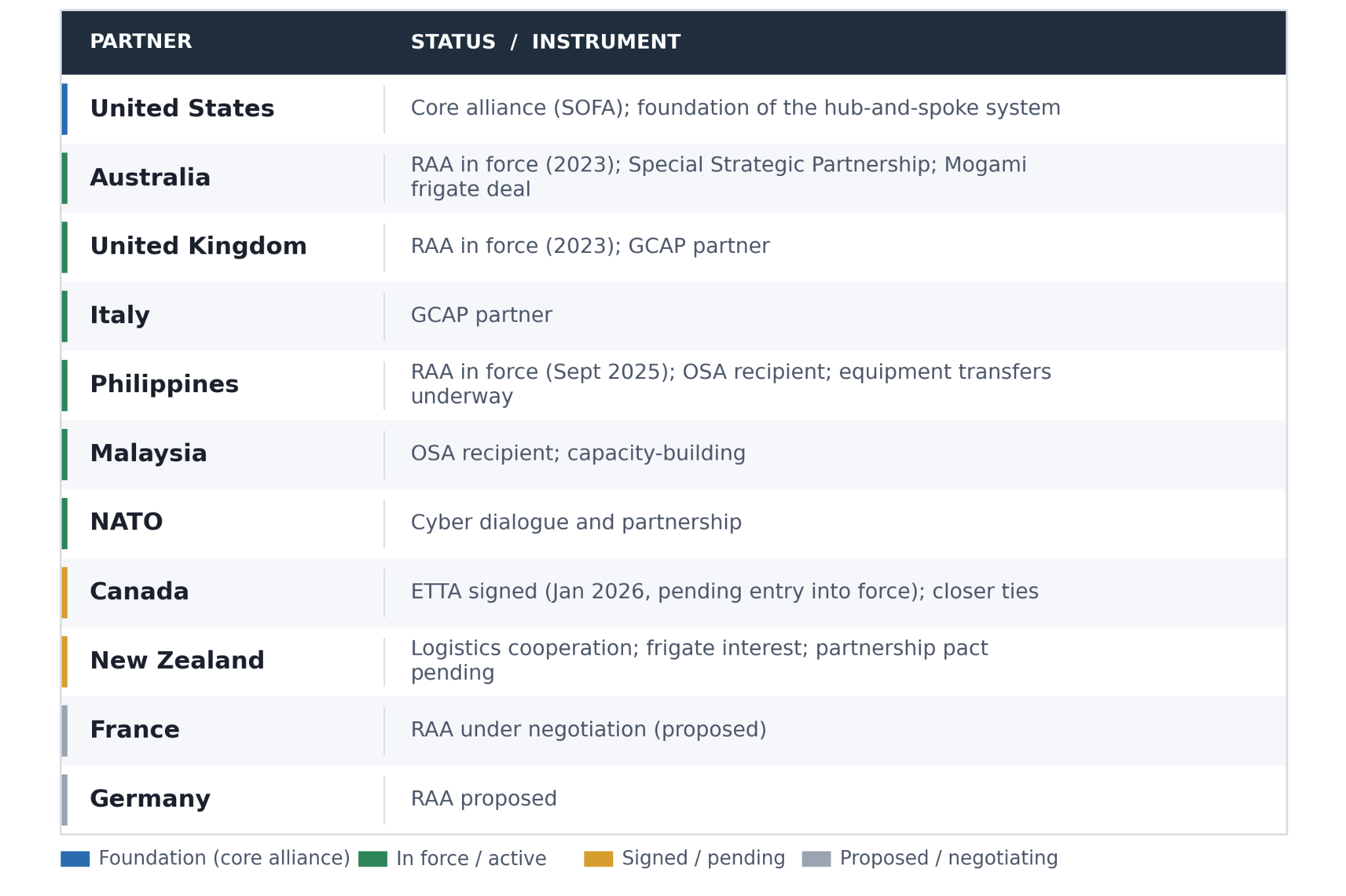
Japan has been establishing new and expanded defense relations within the region, connecting its Australia ties through the archipelagos of Southeast Asia, past Taiwan, and up Japan’s Ryukyu island chain to the main Japanese islands, effectively building an island “wall” along China’s maritime frontier.
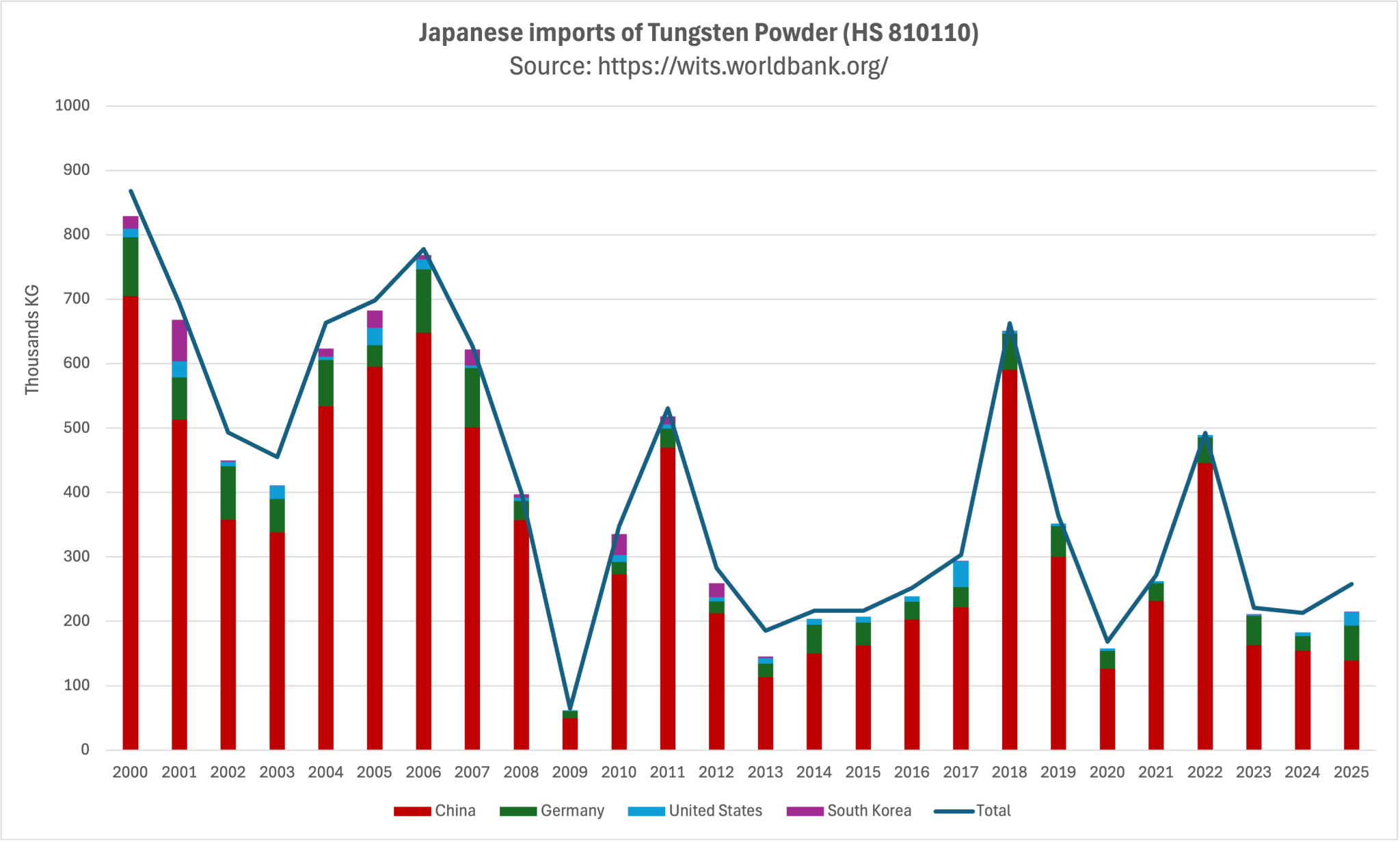
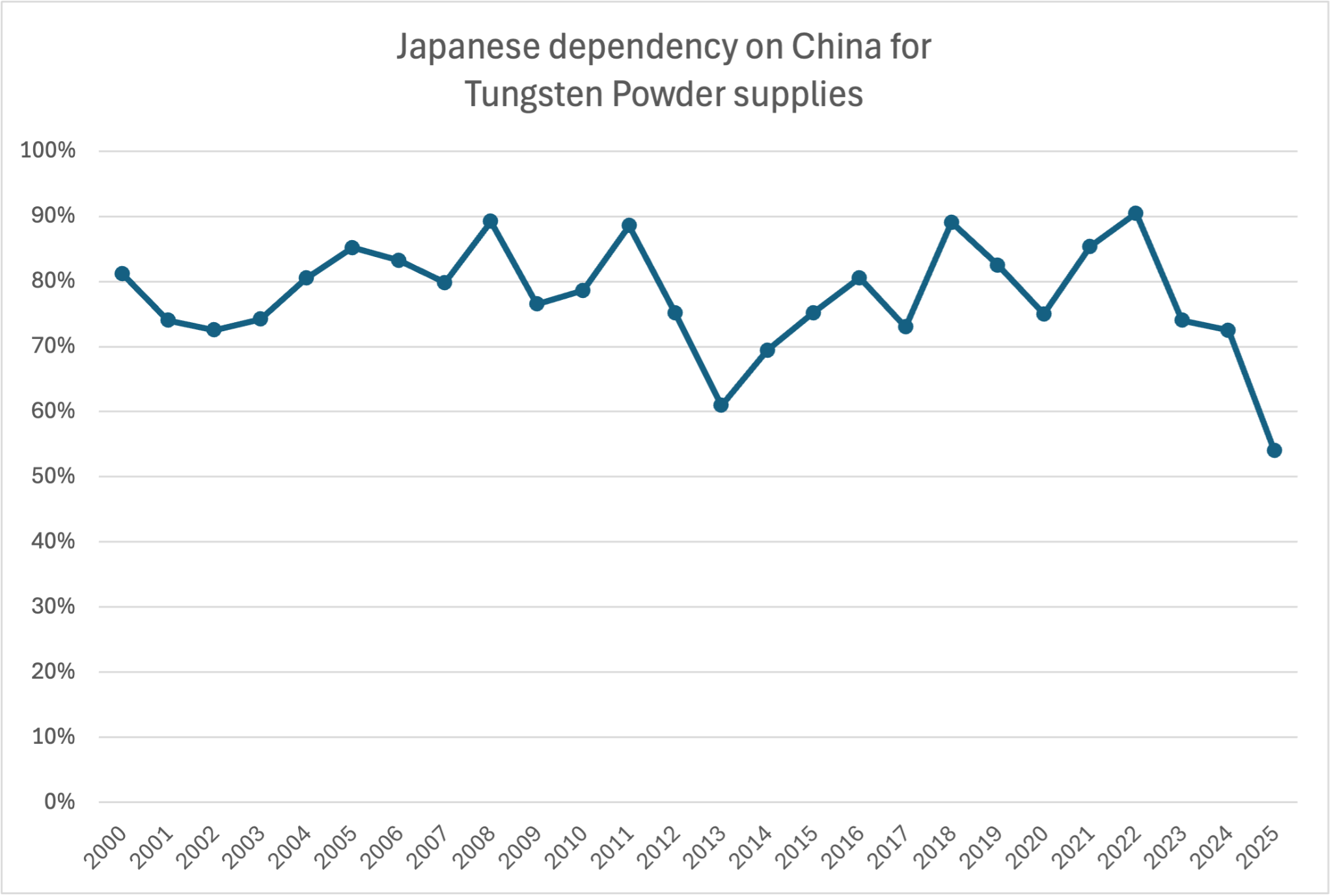
Japan is significantly dependent on China for the tungsten powder used in producing tungsten hexafluoride, a critical gas for the semiconductor industry. Despite policy towards Chinese divestment and stockpiling initiatives, Japanese firms are still reliant on Chinese inputs.
Additional author contributions from Ethan Burk